
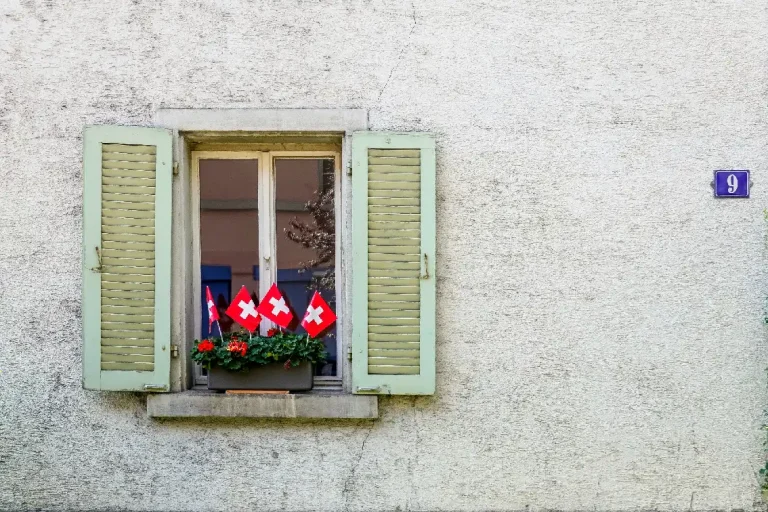
Switzerland is unique in having four national languages: German, French, Italian and Romansh. This multilingualism is the result of the links forged with neighbouring Germany, Austria, France and Italy. It’s a richness that needs to be nurtured and preserved. In Switzerland, children learn at least one second national language at school, in addition to their mother tongue. Two-thirds of the population use more than one language at least once a week.
Language: definition
Language is a means of communication between people who are both transmitters (the speaker) and receivers (the listener). It is a complex system of sounds and characters which, linked together according to certain rules, form larger units such as words and sentences. Each written sign (letter, symbol, character) is assigned a meaning.
Learning a language
A pleasure for some, a headache for others. For all of us, learning a foreign language is a challenge that presents varying degrees of difficulty. The difficulty of the exercise obviously depends on the willingness of the learner, but also on the basics of their own mother tongue.
But which languages are the hardest to learn? While there are no official rankings, Mandarin and Arabic are clearly among the most complex languages.
– Chinese, or more precisely Mandarin, the most widely spoken Chinese language, is not a language of letters, but a language of signs comprising a total of more than 80,000 unique characters. Each character represents a word which, when combined with another sign, can form a new word, making thwhich very complicated for learners. But the multitude and diversity of Chinese characters are not the only factors that make learning the language difficult. Mandarin is also a so-called tonal language, a concept that is quite alien to us Swiss. The meaning of a syllable varies according to how it is stressed. There are four tones, in addition to the neutral tone. For example, the syllable “ma” can me“n ”other, hemp, horse or insult. However, Chinese grammar does have similarities with German grammar when it comes to the position of the parts of speech, which is enough to lift the spirits of even the most discouraged!
– Arabic is also very complex for us. The first difficulty is the direction in which it is written: from right to left. And while the 28 letters of the Arabic alphabet can be mastered quickly, each letter comes in four forms. The same letter is written differently depending on whether it is placed on its own, at the beginning of a word, in the middle of a word or at the end of a word. An additional difficulty is that Arabic has short vowels, long vowels and split vowels. Short vowels are not letters in their own right. They are written above or below a consonant as an auxiliary sign. Of course, everything can be learned, but many texts are printed without accentuation marks. Understanding the text is therefore difficult if you don’t know the written word and the grammatical structure of the language. The latter is surprising: learning Arabic verbs alone requires a great deal of willpower, because they are formed by root. There are up to 15 roots derived from the root word, each with a different meaning. With the right amount of willpower, you can learn anything, including how to pronounce the guttural sounds of Arabic.
The importance of language
Without language as a means of communication, human beings would not be human. Language is expressed through sounds, expressions and gestures. A veritable social bridge, it is essential to human relations. Language and thought are mutually dependent. Language is our key to the world, enabling us to participate in it and shape it. It enables us to have social exchanges. Language is life.
Conclusion
Learning a foreign language is an individual challenge that is largely influenced by the learner’s mother tongue. German and French, too, are far from easy languages to learn, and can be arduous, particularly for non-native speakers.
In addition, languages such as Chinese and Arabic are particularly demanding for users of the Latin alphabet, due to their completely different writing systems and grammatical structures.
Do you need professional support for your national or international communications? Our translators will put their passion and expertise at your service! Send us your request to info@delicatext.ch.