
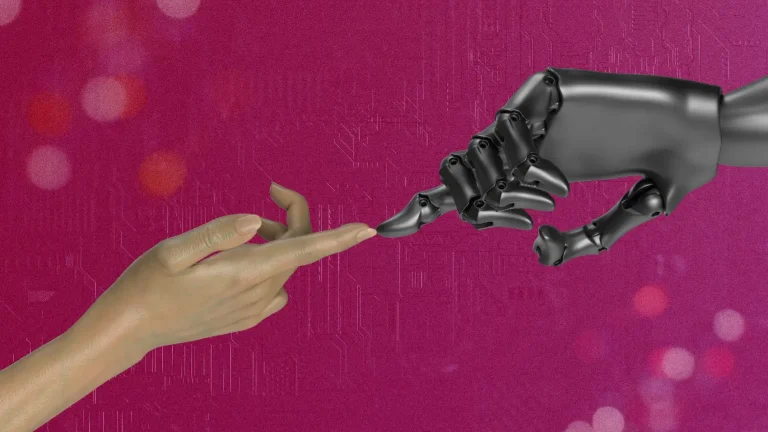
In 2003, I started my own business straight after graduating. I quickly found my first clients. I worked a lot and set up an agency. Everything ran like clockwork for almost two decades. But then things suddenly went quiet with several clients. Other customers came out with the truth: as the quality of machine translation had improved enormously in the meantime, our services had to a certain extent become superfluous. The only drawback was that the texts often lacked the necessary “subtlety” of expression. And so they asked me whether my team and I would be prepared to give their texts pre-translated by artificial intelligence the necessary polish.
I have to admit that it scared me: How was I going to keep the agency running with just proofreading/revisions and post-editing? The workload and margins would probably drop significantly.
So I spoke to my translators (most of them freelancers) and was overwhelmed by their reaction: almost all of them were willing to accept the new working conditions. The in-house staff, on the other hand, rolled up their sleeves to find new clients (to make up for the losses).
It would be a lie to say that business is flourishing as it used to. But I can proudly say that we have moved on. We have all had to tighten our belts and reorient ourselves: from translator to post-editor. In the end, however, we also find fulfilment here: every time we correct a mistake (terminology, sentence structure, grammar or whatever) and every time we make the texts more attractive with small changes, we feel that our story here is not over yet.